
Why Blood Sugar Crashes Cause Weight Gain
Blood sugar crashes are one of the most underestimated drivers of weight gain and stubborn fat retention.
They are not just about eating sugar — they are about how well your body regulates energy after food intake.
When blood sugar rises quickly and then drops too low, the body interprets this as an energy crisis and activates survival responses.

What is actually happening in a crash
A blood sugar crash occurs when glucose levels spike rapidly and then fall below the level your body feels stable at.
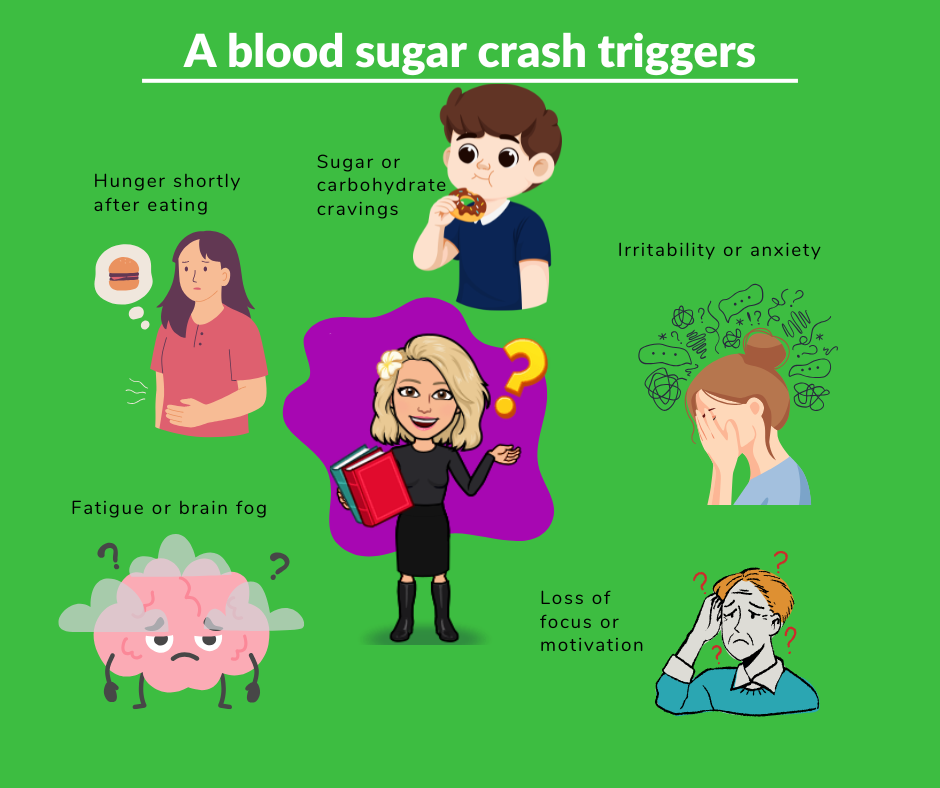
This triggers:
Hunger shortly after eating
Sugar or carbohydrate cravings
Irritability or anxiety
Fatigue or brain fog
Loss of focus or motivation
These are not random symptoms — they are hormonal responses.
Why crashes lead to weight gain
Every crash activates a compensatory stress response in the body.
This includes:
Increased cortisol (to raise blood sugar)
Increased insulin secretion
Stronger appetite signals
Preference for quick energy foods
Over time, this cycle encourages fat storage and reduces metabolic stability.

The hidden cycle most people miss
Blood sugar spikes → crash → cravings → overeating → repeat
This cycle is often misinterpreted as poor discipline or emotional eating.
In reality, it is a physiological loop driven by unstable energy regulation.
The more frequently it occurs, the more the body adapts toward fat storage efficiency.
Why this matters for weight loss
When blood sugar is unstable, the body prioritises:
Fast energy availability
Stress hormone activation
Fat storage protection
This makes fat loss significantly harder even with calorie control.

Clinical perspective
In practice, stabilising blood sugar is often one of the first foundational steps in reversing:
Persistent cravings
Afternoon energy crashes
Stubborn abdominal fat
Emotional eating patterns
It is not about restriction — it is about regulation.
How this connects
Related reading:
Your Next Step
If your energy, cravings, or weight feel inconsistent, your body is likely responding to blood sugar instability rather than a lack of effort or discipline.
Warm wishes,

Vicki Witt | Clinical Nutritionist | Holistic Coach | Reiki Master | Certified LEAP allergy therapist Over 30 years of successfully helping you achieve optimal health and weight loss 🍏| www.vickiwittweightloss.com
About Vicki:
Vicki Witt is a Clinical Nutritionist, Holistic Health Coach, and Reiki Master. She has been practicing over 30 years and specializes in holistically customizing diet and lifestyle plans to each individual for weight loss and hormonal control. Her clientele often report they feel the best they have ever felt and wish they had started sooner. One of the USA and Australia's top Nutritionists, she has won multiple awards for her services in the industry.


Book a Free Nutrition Assessment: /book-assessment-globalWork With Me: /work-with-me


Comments