.png)
Why Cortisol Dysregulation Is Blocking Your Weight Loss (Even If You Don’t Feel Stressed)

Many people associate cortisol with obvious stress — feeling overwhelmed, anxious, or under pressure.
But in reality, cortisol dysregulation can exist even when you don’t feel “stressed” mentally.
Cortisol is a key metabolic hormone that regulates energy, blood sugar stability, fat storage, inflammation, and sleep cycles. When its rhythm becomes disrupted, weight loss can become significantly more difficult — even if diet and exercise are consistent.

What cortisol is actually doing in the body
Cortisol follows a natural daily rhythm. It should be highest in the morning to support energy and gradually lower throughout the day to allow rest and recovery.
When this rhythm is disrupted, the body can shift into a state of metabolic imbalance.
Cortisol directly influences:
Blood sugar regulation
Fat storage (especially abdominal fat)
Appetite and cravings
Sleep quality and recovery
Energy output throughout the day

Signs of cortisol dysregulation
In clinical practice, cortisol imbalance does not always look like “stress.”
Instead, it often shows up as:
Wired but tired feeling
Afternoon energy crashes
Difficulty winding down at night
Light or broken sleep
Waking unrefreshed
Increased cravings for sugar or salt
Stubborn belly fat despite effort
These patterns often appear even in people who do not identify as stressed.

Why cortisol disrupts weight loss
When cortisol remains elevated or poorly timed, the body prioritises survival over fat loss.
This leads to:
Increased blood sugar release into the bloodstream
Higher insulin response
Greater tendency to store abdominal fat
Reduced metabolic flexibility
Disrupted hunger and satiety signalling
Over time, the body becomes more efficient at storing energy and less efficient at using it.
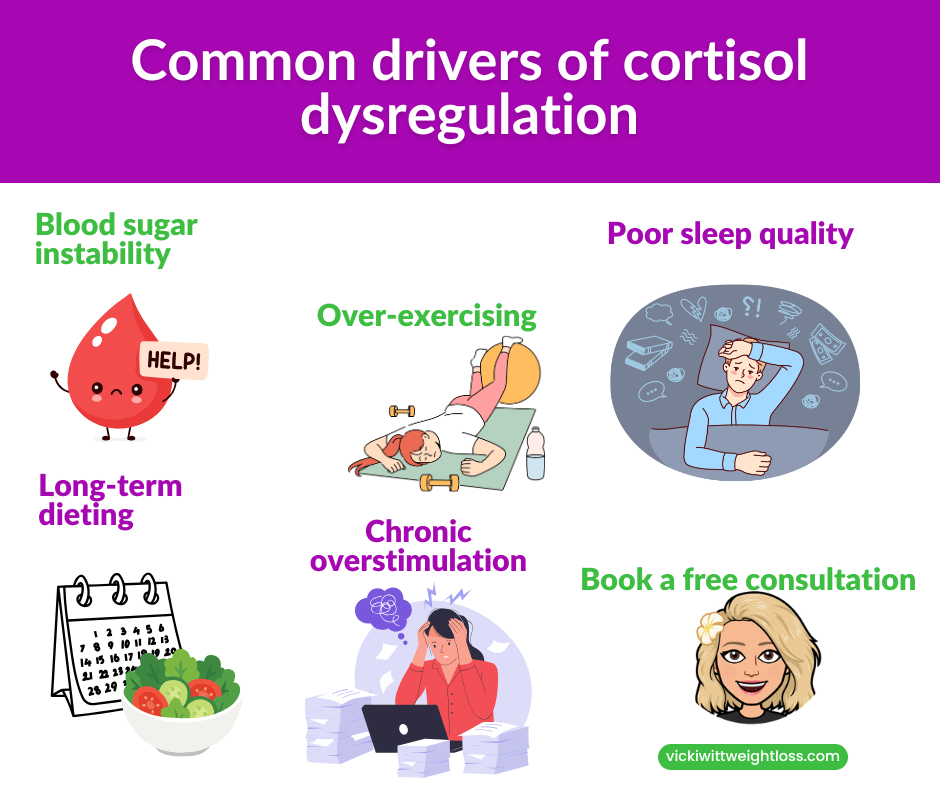
Why this happens (common drivers)
Cortisol dysregulation is usually not caused by emotional stress alone.
It is often driven by:
Blood sugar instability throughout the day
Poor sleep quality or irregular sleep patterns
Over-exercising or under-recovering
Long-term dieting or calorie restriction
Chronic overstimulation (caffeine, screen exposure, workload)
This creates a constant “alert state” in the body.
How this connects to your system
Cortisol interacts with nearly every major metabolic pathway:
Related reading:
Why this matters
Many people try to fix cortisol issues with stress management alone — but the real driver is often metabolic and circadian imbalance.
Until blood sugar stability, sleep rhythm, and recovery capacity are restored, cortisol patterns often remain disrupted.

The key shift
Cortisol is not just a stress hormone — it is a metabolic regulator.
When its rhythm is restored, energy stabilises, cravings reduce, and fat loss becomes significantly easier.
Your Next Step
If you’ve been trying to eat well, exercise, and “do everything right” but still feel stuck with your weight, energy, or cravings — the missing piece is usually not effort… it’s clarity.
This is rarely caused by one factor alone. Most people only see change when the underlying physiological pattern is correctly identified.
Warm wishes,

Vicki Witt | Clinical Nutritionist | Holistic Coach | Reiki Master | Certified LEAP allergy therapist Over 30 years of successfully helping you achieve optimal health and weight loss 🍏| www.vickiwittweightloss.com
About Vicki:
Vicki Witt is a Clinical Nutritionist, Holistic Health Coach, and Reiki Master. She has been practicing over 30 years and specializes in holistically customizing diet and lifestyle plans to each individual for weight loss and hormonal control. Her clientele often report they feel the best they have ever felt and wish they had started sooner. One of the USA and Australia's top Nutritionists, she has won multiple awards for her services in the industry.


Certified and Registered Nutritionist


Comments